

How Modern Businesses Build Scalable AI Systems Without Tool Sprawl
The digital workspace has become a graveyard of forgotten subscriptions. Every week, a new “revolutionary” app hits the market, promising to solve a specific problem with a single click. We buy the license, bookmark the tab, and add it to our growing collection of isolated digital islands. This fragmented approach is one of the biggest bottlenecks in modern business operations.

We are witnessing a fundamental shift in how technology creates value. The era of the “magic app” is fading. Entrepreneurs who chase individual features instead of systems find themselves trapped in manual handoffs, constant rework, and cognitive overload. The winners of the next decade will not be defined by how many tools they use, but by how well they understand the difference between an AI Ecosystem vs AI Tools.
This shift is not about replacing one app with another. It is about moving from disconnected parts to a cohesive nervous system. When AI is treated as a set of standalone destinations, humans end up working for the machine instead of directing it.
The Cognitive Tax of the Franken-Stack

Most businesses operate what can only be described as a Franken-stack. One AI for writing. Another for images. A third for research. A fourth for scheduling. On paper, this looks advanced. In practice, it creates friction.
The real issue is not the quality of the tools. It is data fragmentation.
Your writing tool has no idea what your analytics just revealed. Your research assistant cannot pass context to your publishing workflow. Someone has to connect the dots — and that someone is always the human.
This creates a hidden cost: cognitive tax.
Every context switch drains focus. Strategic thinking is replaced by coordination work. Intelligence exists, but it is locked in silos. And intelligence that cannot move is effectively useless.
Why the AI Ecosystem vs AI Tools Debate Is Already Over
This is not just a technical argument. It is an economic one.
Disconnected tools force businesses to pay twice:
- Once for overlapping features
- Again for the human time required to coordinate them
An AI ecosystem compounds value instead of fragmenting it.
Consider a content operation. With isolated tools, research is manual, drafting is manual, formatting is manual, and publishing depends on constant oversight. Each step waits for human input.
In an integrated ecosystem, research triggers drafting. Drafting triggers formatting. The human is involved only when judgment or direction is required.
That difference is not speed.
It is scale.
At this point, you stop being a software user and start becoming a system architect.
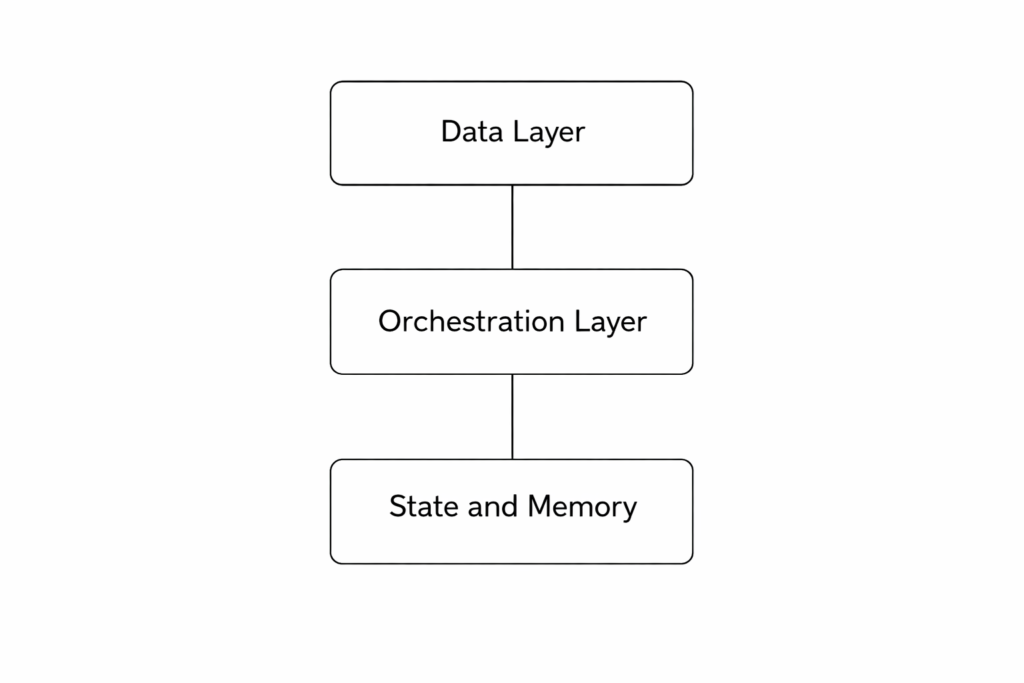
The Three Pillars of a Functional AI Ecosystem
A true ecosystem is defined by how intelligence flows, not by how many tools are involved.
1. A Common Data Layer
Data is the bloodstream of the system. Insights from customer feedback should inform marketing. Market behavior should inform product decisions. When data is centralized, intelligence becomes continuous instead of episodic.
2. The Orchestration Layer
This layer decides what happens next. It manages handoffs between agents, determines task completion, and triggers the next action. Tools like Make, n8n, or custom workflows turn isolated actions into coordinated execution.
3. State and Memory
Standalone tools forget everything. Ecosystems remember.
They retain brand context, strategic goals, and historical performance. Over time, this memory makes the system sharper, more consistent, and more aligned with the business it serves.
What an AI Ecosystem Looks Like in Practice
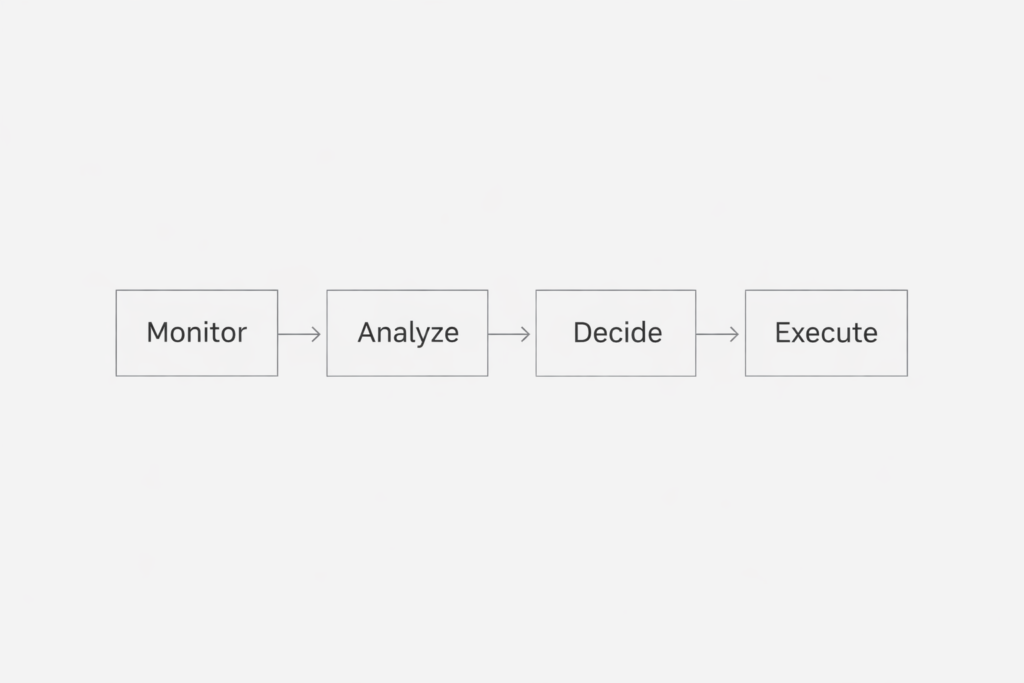
Imagine a simple, realistic setup:
A monitoring agent detects a competitor change.
An analysis agent evaluates the impact using historical data.
A strategy agent proposes response options.
A publishing workflow prepares approved updates.
No dashboards. No exports. No re-prompting.
The human receives one message with clear options.
One decision replaces dozens of manual steps.
That is the difference between automation and agency.
Tool Automation vs Agentic Execution
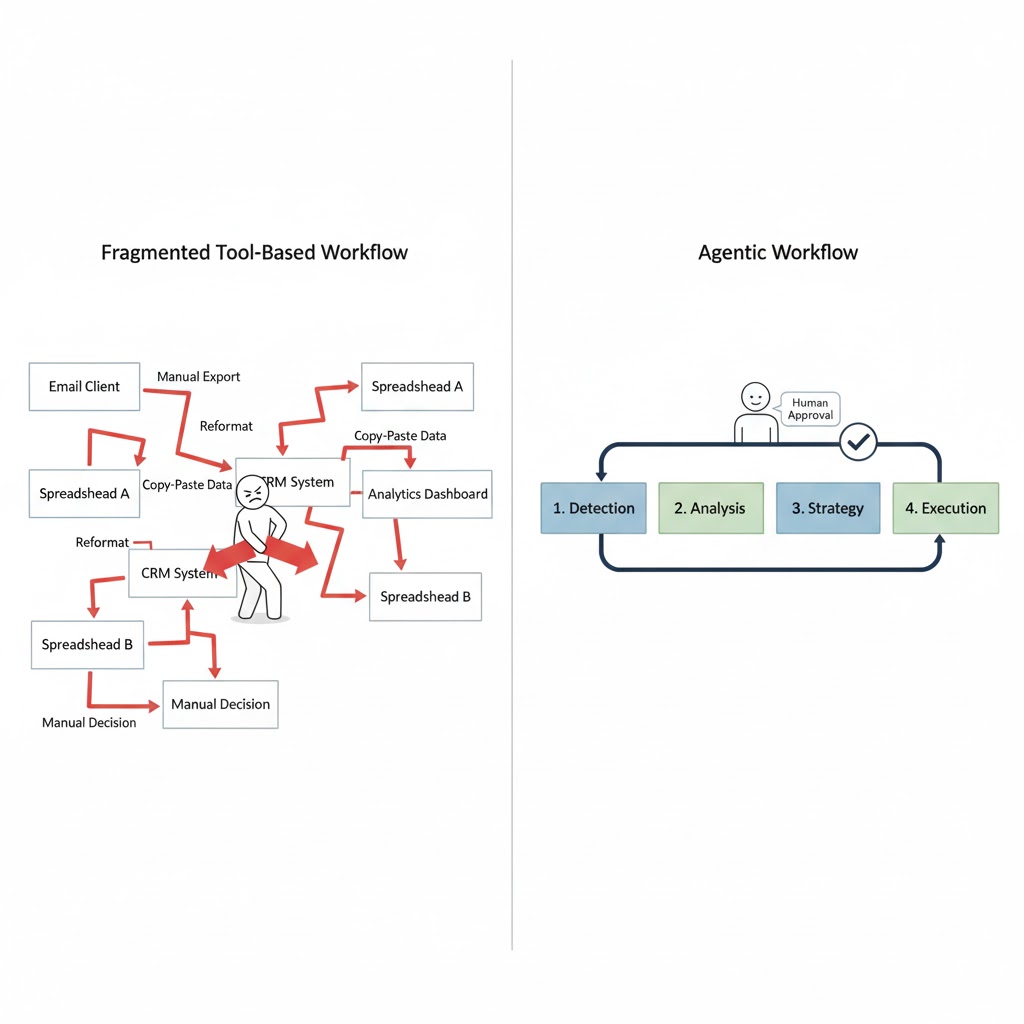
When market conditions change, the contrast becomes obvious.
Tool-based approach:
An alert arrives. Data is checked manually. A response is drafted. Updates are pushed one by one.
Ecosystem-based approach:
Detection triggers analysis. Analysis triggers strategy. Execution waits for approval and then runs automatically.
In the second scenario, the human directs outcomes instead of carrying information. This is what agentic systems enable.
“But Ecosystems Are Harder to Build”
They are.
Architecture always requires upfront thinking. But tools are expensive forever.
A Franken-stack taxes attention daily. An ecosystem demands effort once and reduces operational friction continuously. The real risk is not complexity — it is remaining stuck as the integration layer while competitors automate decision flow.
Strategic Advantages of Integration
An AI ecosystem delivers advantages that tools cannot replicate:
- Consistency: Outputs align with shared logic and data
- Zero latency: Information moves without human delay
- Scalability: The same system handles ten tasks or ten thousand
- Proprietary intelligence: The system learns from your data
These are structural advantages, not features.
The Technical Reality: Interoperability Beats Features
The most valuable tools in the coming years will not be defined by their interface. They will be defined by their ability to integrate.
If a tool cannot export data, be triggered externally, or fit into a broader workflow, it becomes a dead end. Professional AI stacks are modular by design. Models change. Architecture remains.
2026 and the Disappearance of the Interface
We are moving toward a headless digital world. The most effective AI ecosystems will not live inside dashboards. They will operate quietly in the background and surface only when human input is required — through email, messaging, or voice.
The interface becomes optional.
The engine becomes everything.
This is the foundation of the self-driving business.
Escaping the Tool Maze
Every new tool should answer a single question:
Does this strengthen the system, or fragment it?
If it stands alone, it is a distraction.
The era of collecting AI tools is ending. The era of designing AI ecosystems has already begun. The goal is no longer to find the best app, but to build the right architecture for your mission.
Stop collecting tools.
Start building a workforce.
Frequently Asked Questions
What is the difference between AI tools and an AI ecosystem?
AI tools perform isolated tasks. An AI ecosystem connects intelligence across workflows. The difference is not capability, but coordination.
Do small businesses need an AI ecosystem?
They don’t need one immediately, but they must design with one in mind. Systems that grow together prevent costly rebuilds later.
Is building an AI ecosystem expensive?
It requires more upfront thinking, but it reduces long-term operational cost by eliminating manual coordination.
What is the first workflow to systemize?
Any process where information is copied between tools. If a human is acting as the messenger, the system is broken.


